People talk about compound interest as if the rate does all the work. It does not. In real life, the result comes from the mix of rate, time, contribution discipline, tax, and inflation.
How compound interest actually builds momentum
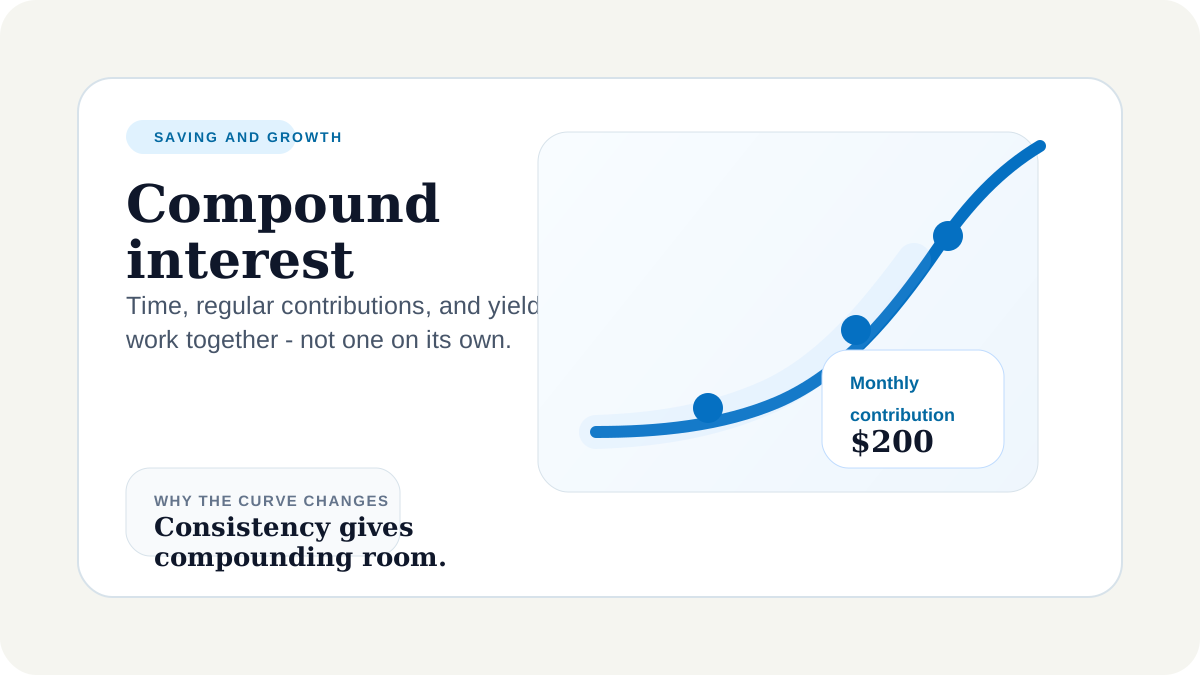
At the start, your own deposits make up most of the total balance. Later, the interest base is larger, so interest adds more visibly to the result. That is why long-term saving curves often look slow at first and stronger later.
Why regular contributions matter so much
Consistent contributions are one of the most underrated parts of compounding. A saver who adds smaller amounts every month often beats a saver who waits for occasional perfect moments. The habit creates the scale that compounding needs.
Savings
Test your plan with and without monthly additions
Running the same interest rate under two contribution patterns usually shows where the real growth engine sits.
Tax and inflation change the honest answer
It is easy to celebrate the final balance and ignore how much tax takes away or how inflation reduces real purchasing power. A useful savings projection should do more than show a nice nominal number. It should show what the money is still worth.
The most useful filter for savers
If a savings plan looks good only before tax and before inflation, it may still be weaker than it appears in everyday life.
Savings account or fixed deposit
A fixed deposit often offers predictability. A savings account offers flexibility. The better choice depends on whether the money is part of a reserve layer or a longer growth plan. The rate matters, but access and discipline matter too.
When a calculator gives you a realistic answer
Savings
Compare short and long horizons side by side
A good compounding plan should still make sense when you test multiple time frames, not just the one that gives the prettiest chart.
What actually makes compounding work
Compounding is powerful, but it needs three things to show up clearly: enough time, steady funding, and a realistic yield. Without that mix, it is easy to overestimate what the headline rate alone can do.
Common questions
Does compound interest matter for small balances?
Yes, especially when small balances are paired with consistent monthly contributions and enough time.
What matters more: rate or time?
Both matter, but time and contribution discipline often create a bigger difference than a short-term hunt for the highest headline yield.
Can inflation cancel the benefit?
Yes. That is why it helps to look at real value after tax and inflation, not just the final headline balance.
Read next
Savings account vs fixed deposit: which one fits the goal?
The better rate is not always the better home for your cash. Here is how to choose between flexibility and a fixed-term deposit without fooling yourself.
APR vs interest rate: which number tells you the real loan cost?
A low interest rate can make an offer look cheap in the first line. APR usually gives you a better first read of the full borrowing cost.
The credit card minimum payment trap, explained simply
Minimum payments ease the pressure this month, but they can keep card debt alive for years. Here is how to spot the trap and build a payoff plan that actually ends.