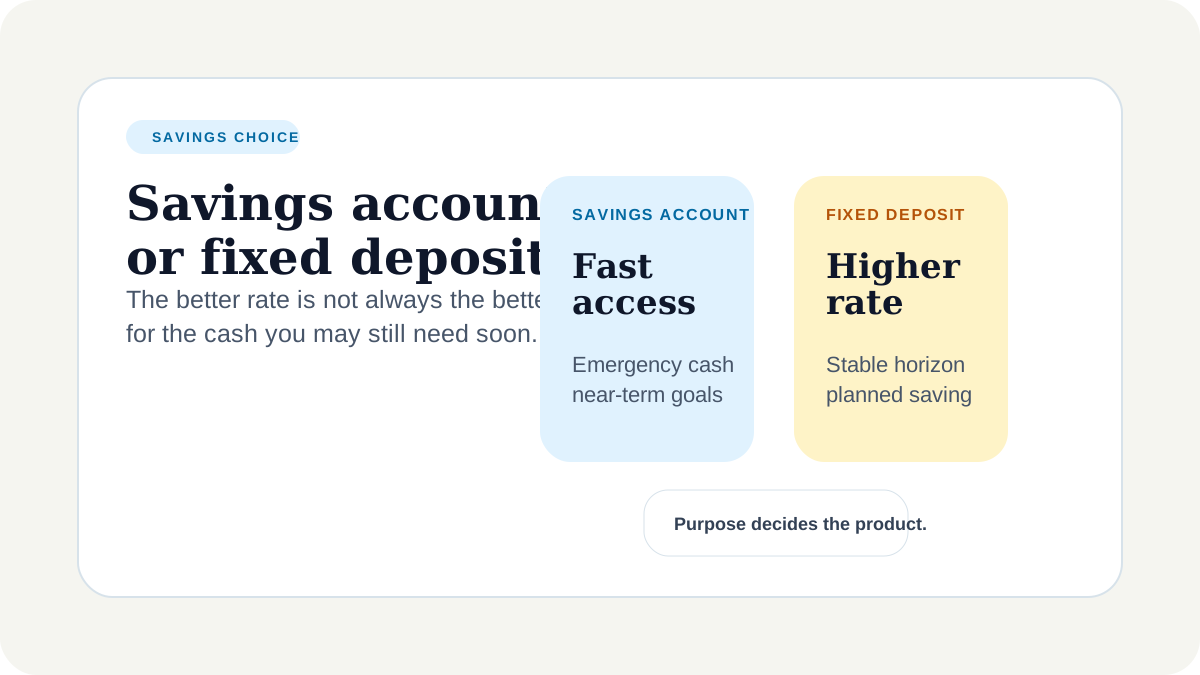
People often compare savings accounts and fixed deposits by headline rate alone. That is too narrow. The better choice depends on what the money is for, how soon you may need it, and whether losing access would create stress.
Use the goal to choose the product
Start by asking what the money needs to do. Emergency cash, moving money, and near-term spending usually need fast access. Savings for a planned purchase next year may be able to sit still for longer.
When the goal is fuzzy, people often chase the better-looking rate and end up locking away cash they actually needed to keep flexible.
When a savings account is the better home for the money
A savings account is usually the safer choice when the cash may need to move quickly. Emergency funds, irregular bills, and short-term reserves all benefit from easy access more than from squeezing out every extra fraction of yield.
When a fixed deposit earns its place
A fixed deposit makes more sense when the money has a clear time horizon and you do not expect to touch it. In that case, the higher rate can be worth the lower flexibility, especially if it helps you stop dipping into savings casually.
Savings
Run the same amount under two different saving setups
Compare a flexible account and a fixed-term deposit with the same starting balance to see whether the extra yield is really meaningful.
The headline rate is not the whole decision
A higher rate is easy to market. Access, penalties, and the risk of needing the money early are less glamorous, but they often matter more. That is why a weaker rate can still be the better choice when the money is part of your stability layer.
A practical rule
If the money protects you from unexpected costs, flexibility is usually part of the return, even if it does not show up in the headline interest rate.
How to compare the two options without fooling yourself
Savings
Check whether the higher rate changes the result enough
Sometimes the fixed deposit wins clearly. Sometimes the extra return is small enough that keeping access is the smarter trade.
Pick the account that matches the job
The better product is the one that fits the role your cash has to play. A savings account keeps money close. A fixed deposit rewards patience. The mistake is treating them as interchangeable when they solve different problems.
Common questions
Is a fixed deposit always better because the rate is higher?
No. If you may need the money soon, access can matter more than the extra yield.
When is a savings account the better choice?
It usually makes more sense for emergency funds, short-term goals, and money that cannot be locked away without stress.
Should I split savings between both?
Often yes. Many households keep flexible cash in a savings account and place more stable, longer-term money in a fixed deposit.
Read next
Compound interest explained without the marketing gloss
Compound interest matters, but the real result comes from time, regular contributions, tax, and inflation. Here is what actually moves the outcome.
The credit card minimum payment trap, explained simply
Minimum payments ease the pressure this month, but they can keep card debt alive for years. Here is how to spot the trap and build a payoff plan that actually ends.
How much down payment do you really need for a mortgage?
The minimum down payment that gets you approved is not always the one that lets you sleep well. See how a bigger deposit changes the payment, lender comfort, and the cash you still have after closing.