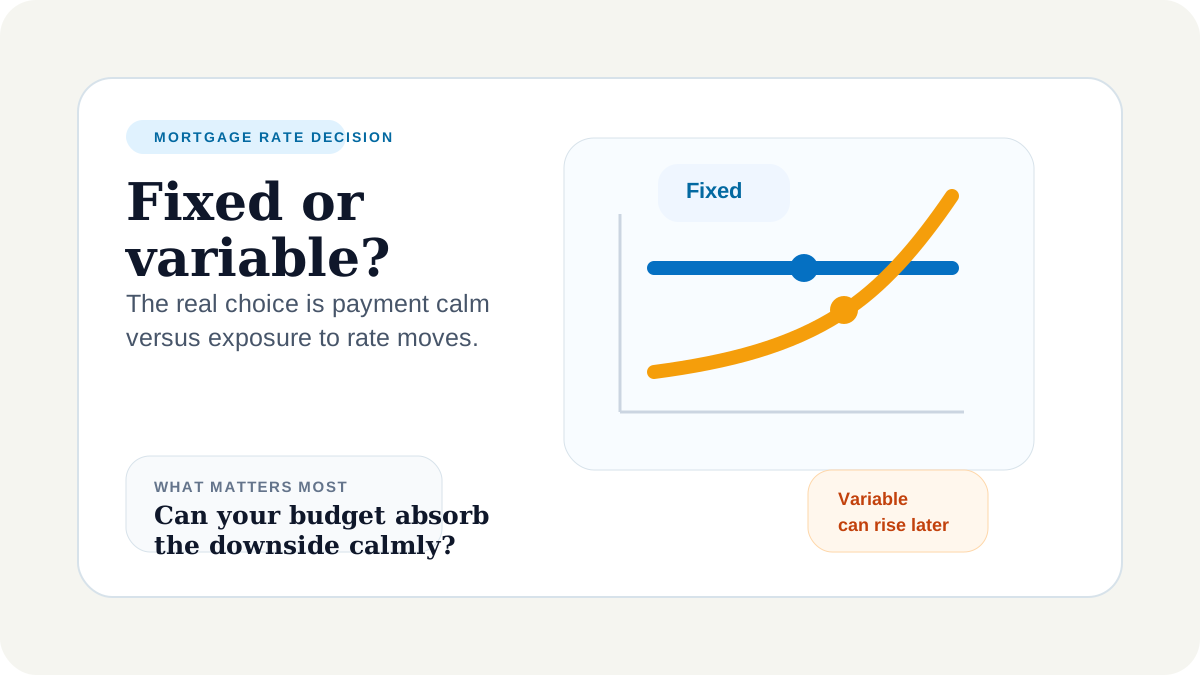
Most people compare fixed and variable mortgages by the first rate they see. That is too shallow. The real decision is about what kind of risk your household can live with for years.
What you are really choosing
A fixed mortgage is mostly about buying predictability. A variable mortgage is mostly about accepting uncertainty in exchange for the possibility of paying less. That means the right answer depends less on headlines and more on how fragile your budget is.
Why fixed often feels expensive until rates move
Fixed rates can look less attractive at the start because certainty has a price. But when rates rise, that price can suddenly look reasonable. Households with tight monthly budgets often discover too late that stability was the thing they should have valued more.
Mortgage
Stress-test the payment, not just the rate
Run the same mortgage under two or three rate assumptions. If the higher scenario already hurts, the cheaper starting rate is probably not the safer choice.
When a variable mortgage can still make sense
A variable rate is not automatically reckless. It can fit borrowers who keep strong cash reserves, expect a shorter ownership period, or can comfortably absorb a higher payment without rebuilding the whole monthly budget. The key word is comfortably, not technically.
The budget question most borrowers skip
If your mortgage payment rose by 15% or 20%, what would actually give way first? Savings? Travel? Retirement contributions? Food and transport are not the same as optional spending. A mortgage choice is safer when you already know where the pressure would land.
A better way to think about it
The wrong mortgage is often not the one with the higher rate. It is the one whose downside you cannot carry when life is already expensive.
How to compare both options honestly
Mortgage
Model the calmer option against the tempting one
A side-by-side mortgage comparison shows very quickly whether the cheaper starting payment is actually worth the risk you take on.
Pick the risk you can live with
Fixed and variable mortgages are not really about predicting the market better than everyone else. They are about choosing the risk profile your household can survive without constant strain.
Common questions
Is a fixed mortgage always the better choice?
Not always. It is often the calmer option for households that need payment stability, but the right answer still depends on budget slack and rate expectations.
When does a variable mortgage become dangerous?
It gets dangerous when the budget only works at today's rate and has no room for a higher payment later.
Should I choose the cheapest starting payment?
Not automatically. The cheaper starting payment can cost more if the rate rises at the wrong moment.
Read next
How much down payment do you really need for a mortgage?
The minimum down payment that gets you approved is not always the one that lets you sleep well. See how a bigger deposit changes the payment, lender comfort, and the cash you still have after closing.
Overpay the mortgage or invest: which moves your money further?
Paying down debt faster can feel safe. Investing can look smarter on paper. The better move depends on rates, tax, flexibility, and how much uncertainty you can tolerate.
How to calculate a loan payment without missing the real cost
A monthly payment is not just math on a formula sheet. Here is how to estimate the payment, compare repayment styles, and spot fees that quietly make the loan more expensive.