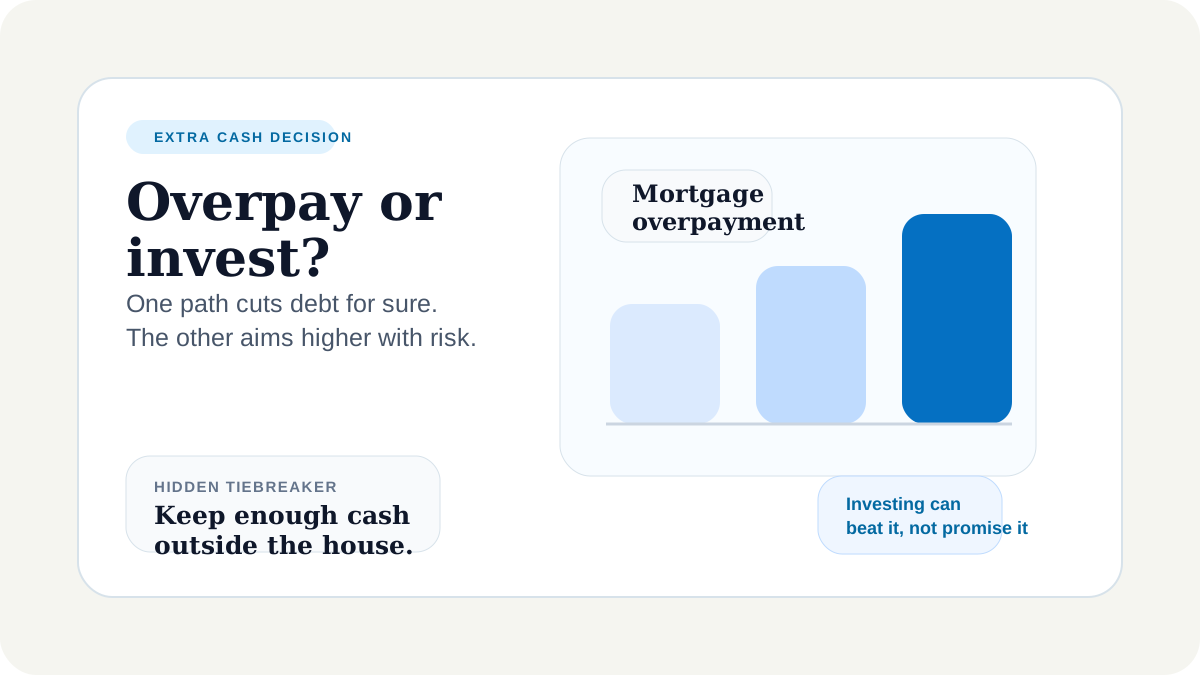
This question sounds like math, but it is really about trade-offs. Overpaying the mortgage gives you a guaranteed saving on interest. Investing gives you a chance at a better result later, but it comes with uncertainty and timing risk.
Why mortgage overpayments feel so compelling
Overpaying debt is easy to understand. You lower the balance, reduce future interest, and build more certainty into the household balance sheet. For many people, that clarity is worth a lot on its own.
Why investing can still win on paper
If the mortgage rate is modest and the investment horizon is long, the market may produce a higher return than the interest you save by overpaying. But that result is not guaranteed, and the worst moment to discover that is when you needed stability more than upside.
Mortgage
See what a regular overpayment does to the mortgage
A quick mortgage run can show how much term and interest you cut by sending the same extra amount to the loan each month.
The part that is not just about returns
A guaranteed 5% saved on mortgage interest and an expected 7% market return are not emotionally equivalent. One is certain. One is noisy. The better choice depends on whether your household sleeps better with lower debt or with more money growing outside the property.
Keep flexibility in the picture
Mortgage overpayments improve the balance sheet, but they reduce access to cash. If you would need to rebuild savings immediately after overpaying, the move may be too aggressive. Good strategy is not only about the highest expected number. It is also about not trapping yourself.
A practical middle ground
If you still need to build emergency cash or medium-term reserves, that usually comes before an all-out race to overpay the mortgage.
How to compare the decision more honestly
Savings
Run the same extra cash through a savings or growth scenario
A savings comparison helps you see whether the non-mortgage path is materially stronger or only looks better because the upside is easier to imagine than the downside.
The best answer is often not extreme
For many households, the strongest move is not full overpayment or full investing. It is a mix that lowers debt, keeps some flexibility, and still gives long-term money a chance to grow.
Common questions
Is overpaying the mortgage always the safer choice?
It is usually the more predictable choice because the interest saved is immediate and guaranteed, but safety also depends on keeping enough accessible cash.
When can investing make more sense?
It can make more sense when the mortgage rate is relatively low, the time horizon is long, and you can accept market swings without panicking.
Should I split the extra money between both?
Often yes. Many households reduce mortgage risk steadily while still investing part of the surplus for longer-term growth.
Read next
Fixed vs variable mortgage: which risk are you actually choosing?
The real choice is not only rate versus rate. It is payment stability versus the chance that your costs move at the wrong time.
How much down payment do you really need for a mortgage?
The minimum down payment that gets you approved is not always the one that lets you sleep well. See how a bigger deposit changes the payment, lender comfort, and the cash you still have after closing.
Compound interest explained without the marketing gloss
Compound interest matters, but the real result comes from time, regular contributions, tax, and inflation. Here is what actually moves the outcome.