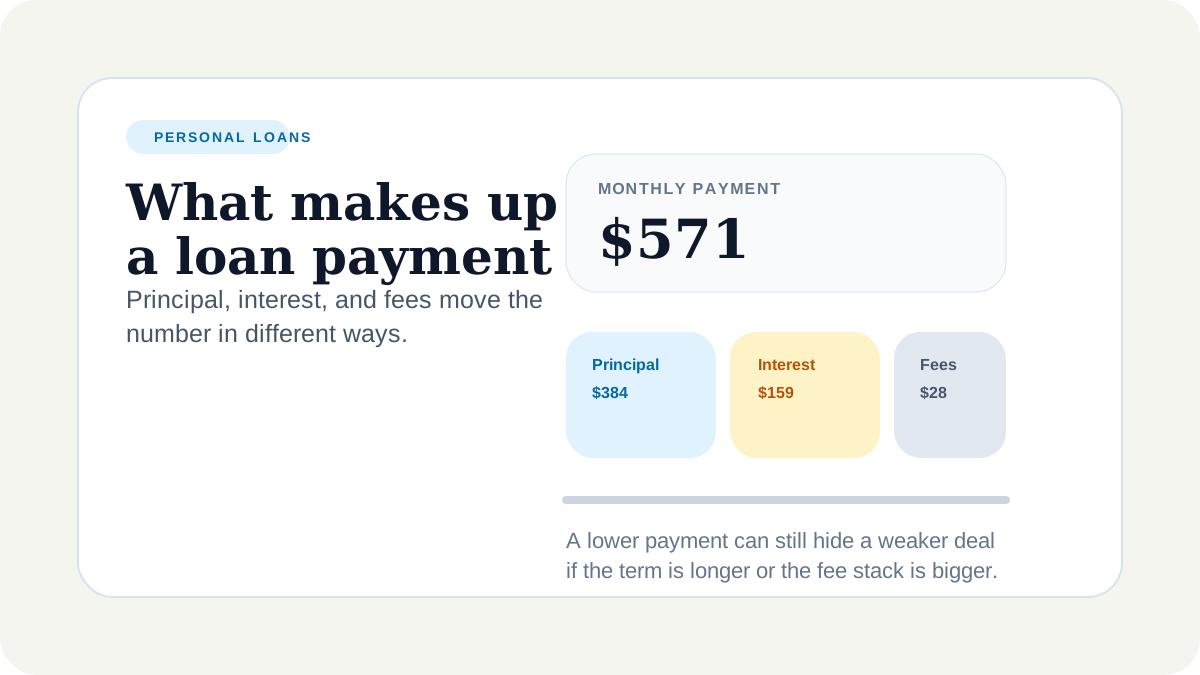
If you just need a rough monthly number, three inputs are enough: loan amount, interest rate, and term. If you want the real borrowing picture, you also need to test fees, repayment style, and whether the payment still looks manageable in a weaker month.
What sits inside a loan payment
A standard payment covers principal and interest. Principal reduces the balance you owe. Interest is the lender's compensation for the outstanding balance. Early in the schedule, the interest share is usually higher because the balance is still large.
That is why many borrowers feel they are paying a lot while the balance barely moves in the opening months. The payment is working. It is just working on expensive balance first.
Turning the formula into a practical comparison
You do not need to memorise the annuity formula to make better decisions. What matters is understanding the levers: bigger balance, higher rate, or longer term all push total borrowing cost up, even when the monthly payment still looks acceptable.
Loans
Run your own payment scenarios
The clearest comparison is always same amount, same term, different cost structure. That makes weak offers stand out quickly.
Equal payments vs faster principal reduction
Equal payments are easier for planning because the monthly number stays predictable. Faster principal-focused schedules often start higher, but they usually reduce total interest. The right choice depends on whether your budget values stability more than cost reduction.
Common mistake
A lower monthly payment does not automatically mean a better loan. It often means the lender simply has more months to charge interest.
How fees quietly change the story
Many borrowers compare loans by rate and monthly payment only. That misses arrangement fees, ongoing charges, or bundled products. Two offers can produce similar monthly payments while still being thousands apart in total cost.
What a safe payment really looks like
A safe payment is not the number you can cover in a perfect month. It is the number you can still absorb when groceries, rent, transport, and one unexpected bill all land at once.
Loans
Compare stable payments against lower total cost
A quick side-by-side test often shows whether the comfort of a lower payment is worth the extra cost you carry over time.
Before you sign, check one thing
The formula tells you the monthly number. A better borrowing decision comes from one extra step: checking how that number changes once fees, repayment style, and real-life budget pressure are all in the frame.
Common questions
Can I estimate a payment without a calculator?
Yes, but once fees and repayment style enter the picture, a calculator becomes the fastest way to compare scenarios accurately.
Are equal payments always the best choice?
Not always. Equal payments are easier to budget, but they can cost more overall than a faster principal-heavy structure.
What is a safe payment-to-income ratio?
For many households, keeping debt payments around 30–35% of net income after fixed living costs is a sensible ceiling.
Read next
APR vs interest rate: which number tells you the real loan cost?
A low interest rate can make an offer look cheap in the first line. APR usually gives you a better first read of the full borrowing cost.
How much loan payment can you actually afford?
The lender's maximum is not the same as a comfortable payment. Here is how to test a monthly number that still works when the month is ordinary, not ideal.
The credit card minimum payment trap, explained simply
Minimum payments ease the pressure this month, but they can keep card debt alive for years. Here is how to spot the trap and build a payoff plan that actually ends.